
Vape puff count vs liquid capacity, four listings compared
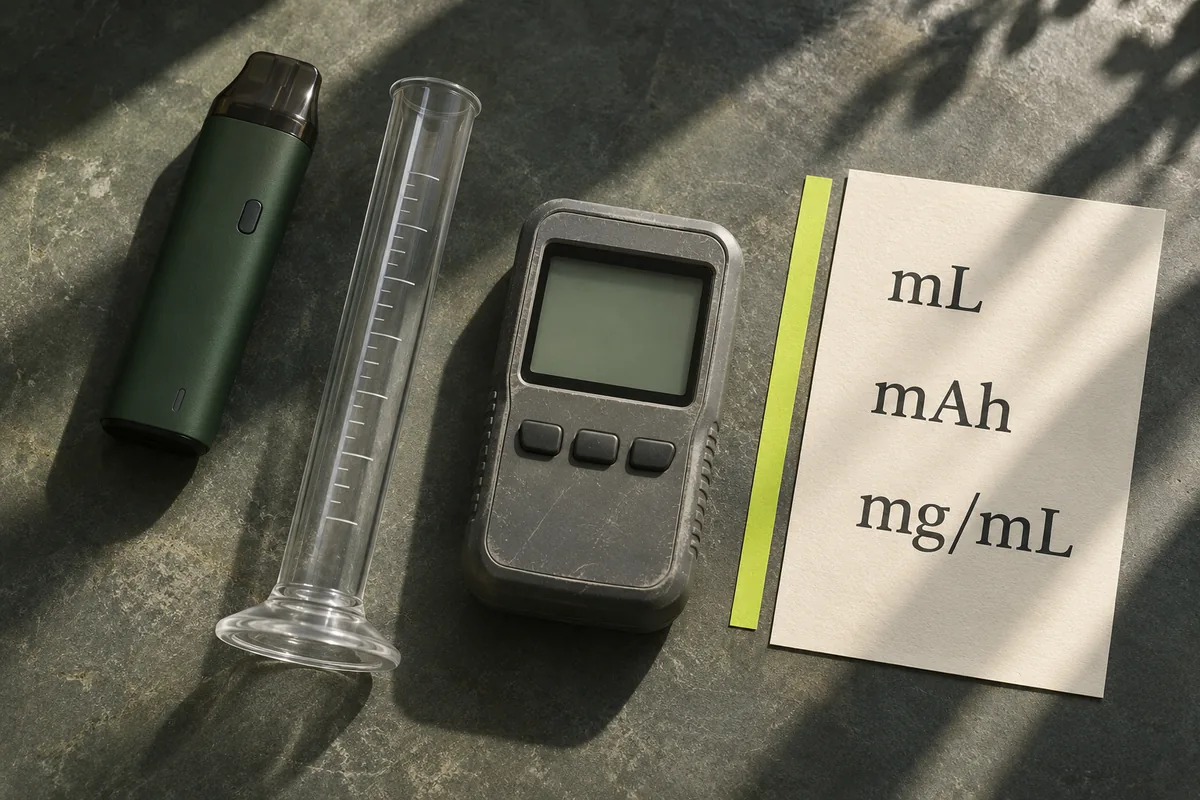
When comparing vape puff count vs liquid capacity, keep the advertised estimate separate from the volume in milliliters. Two reviewed devices each list 16 mL yet carry headline estimates of 15,000 and 25,000. A third device lists 18 mL and two different estimates of its own. These examples show why a number ending in K cannot tell you the liquid capacity by itself.
Puff count vs liquid capacity on two 16 mL devices
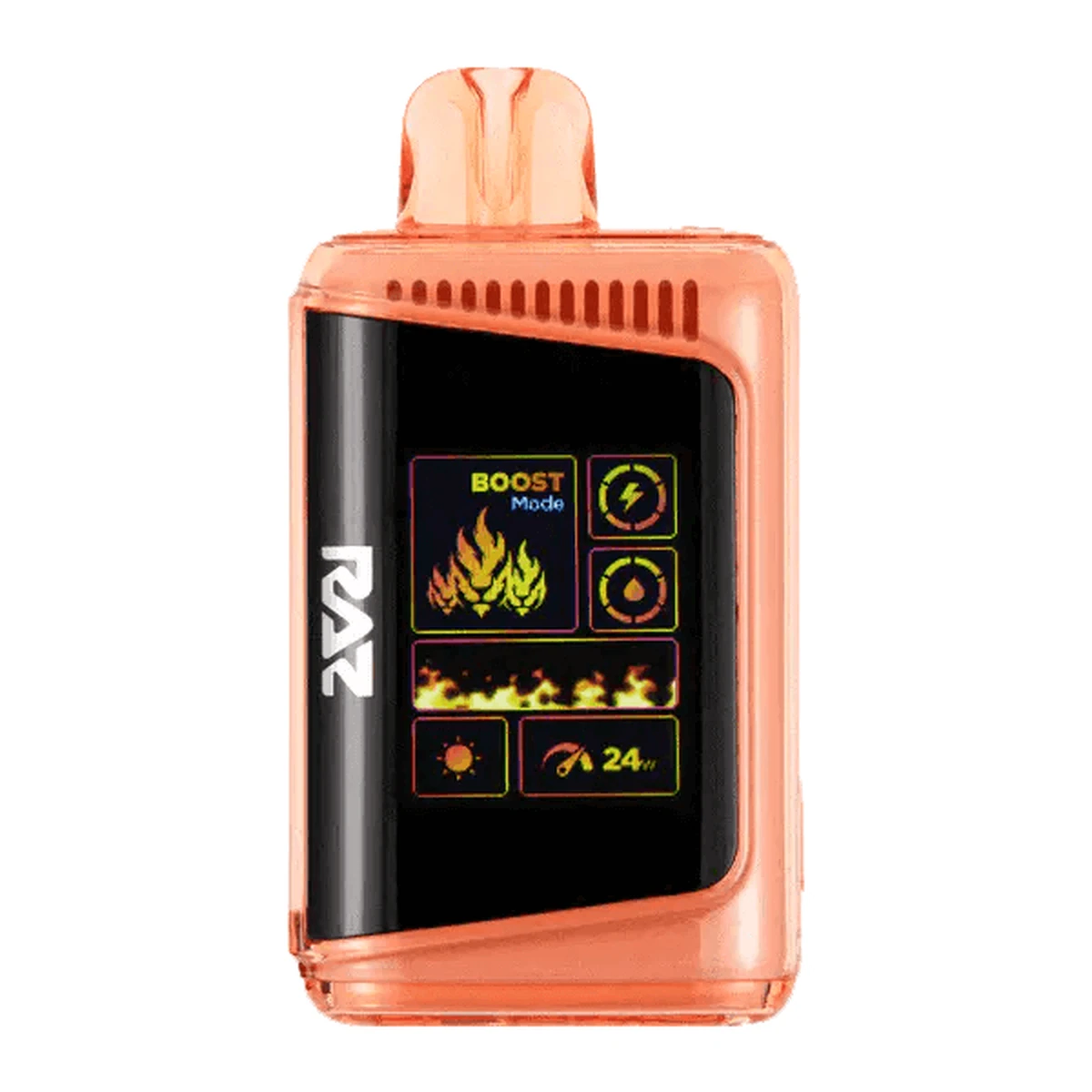
Start with two different models whose listings give the same liquid volume. The Lost Mary MT15000 Turbo Winter Mint has a 16 mL specification and an estimate of up to 15,000 puffs. The RAZ DC25000 Georgia Peach also lists 16 mL and gives an estimate of up to 25,000 in Regular mode. The larger headline number occurs alongside exactly the same stated volume.
| Example | Stated liquid volume | Puff estimate and its scope |
|---|---|---|
| Lost Mary MT15000 Turbo, Winter Mint | 16 mL | Up to 15,000 on the listed device |
| RAZ DC25000, Georgia Peach | 16 mL | Up to 25,000 in Regular mode or 15,000 in Boost |
| Lost Mary MT35000 Turbo, Summer Grape | 18 mL | Up to 35,000 in Smooth mode or 20,000 in Turbo |
Look across the first two rows, then down the last column. At a headline level, the same 16 mL accompanies different figures. Once the RAZ mode is included, its 15,000 figure happens to match the Lost Mary headline. Neither numerical match establishes that the models were measured under identical conditions. The product specifications give no common test protocol for this comparison. Read Lost Mary Direct’s Winter Mint specification and see the two modes on the RAZ Georgia Peach listing.

Two estimates on one 18 mL device
The Lost Mary MT35000 Turbo Summer Grape makes it possible to remove even the difference between models. Lost Mary Direct attaches the higher 35,000 estimate to Smooth mode. It attaches 20,000 to Turbo mode. Both appear on the same product page, next to the same 18 mL capacity and 1,000 mAh battery.
So which figure belongs in a comparison? If the question asks for the headline estimate, write “up to 35,000 in Smooth mode.” If it asks for the retailer’s Turbo figure, write “up to 20,000 in Turbo mode.” A table that omits the modes makes the two rows look like different packages. A table that adds the two figures together invents a total the source never gives. See the original MT35000 mode wording.

Which package does the NERA 70K estimate cover?
A different issue appears on the Lost Mary NERA Fullview 70K Miami Mint page. The retailer ties the 70,000 estimate to two NERA pods. Its description identifies the replacement format, and the specification writes the package configuration next to the count. Copying 70,000 into a field titled “one pod” would silently change the scope of the original claim.
The same listing gives an 800 mAh value for the charging dock. That number answers a battery question about a different component. To preserve the meaning of both figures, keep the count with the two-pod package and keep the battery number with the dock. The source does not establish a personal usage interval for either value. Read the NERA package and dock specifications.

How would you check a puff count vs liquid capacity chart?
Read one row aloud as a sentence. “This listing states 18 mL and up to 20,000 in Turbo mode” describes a single configuration. “This single NERA pod has a 70,000 rating and an 800 mAh battery” would combine a two-pod figure with a dock figure. A sentence that changes what the original numbers refer to needs a more precise column heading.
What to record when an online title is abbreviated
Use four fields for puff count vs liquid capacity comparisons. Record the complete model, the liquid volume and unit, the quoted estimate with its mode, and the number of devices or pods the estimate covers. Keep a field blank when the source does not state it. A blank cell gives a later reader a clear place to check. A guessed conversion leaves no trace of the missing information.
This approach also works in reverse. A 16 mL label does not resolve the model in the first two examples, so an identifying name or a second hardware field is still needed. For the wording used in other listings, consult the guide to model, capacity and strength labels. For a removable component, the device formats guide explains how a pod and a dock can each have their own specification.
Puff estimates and liquid capacity describe a device; they do not indicate marketing authorization. The FDA list of authorized e-cigarettes provides a separate status check for exact U.S. products.